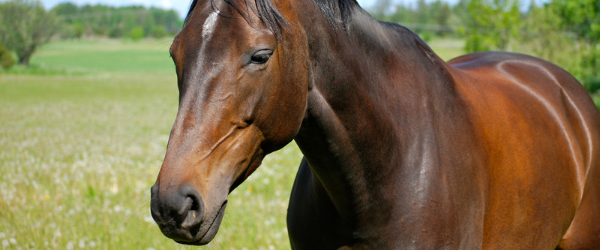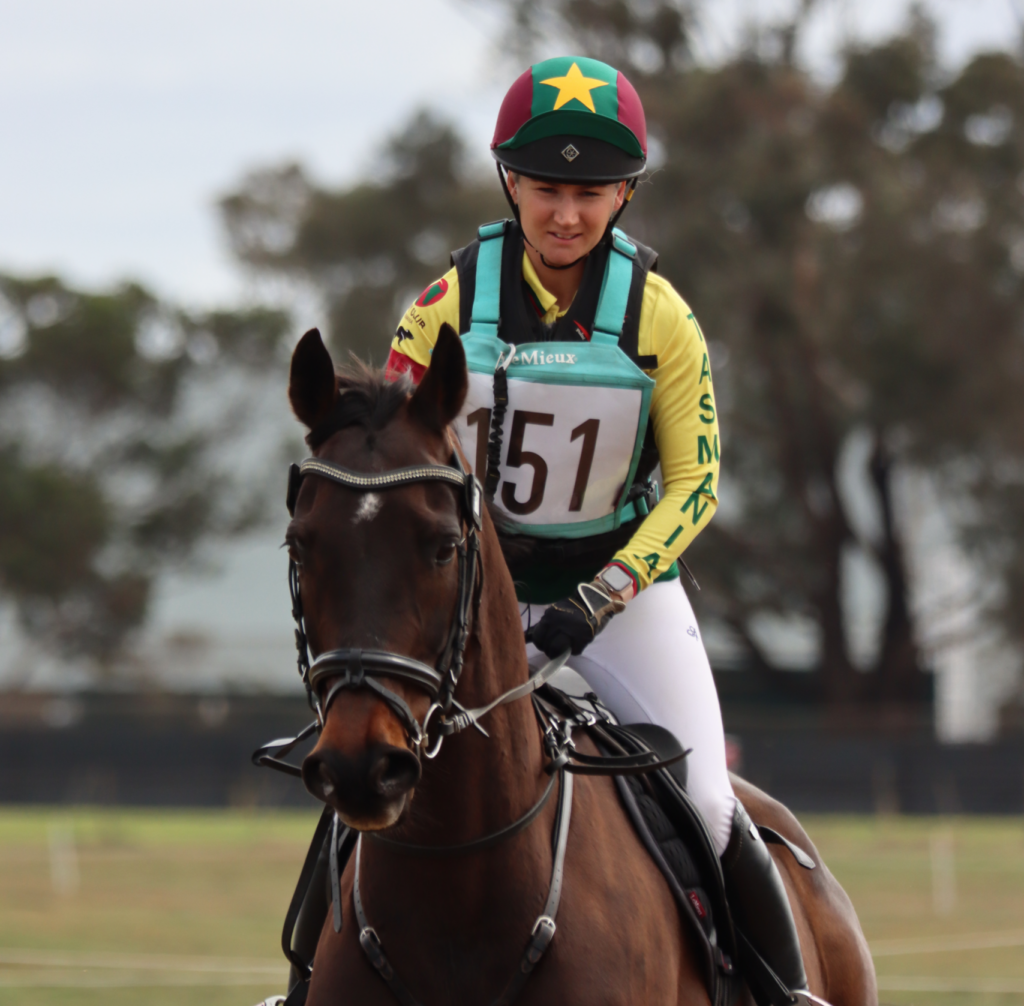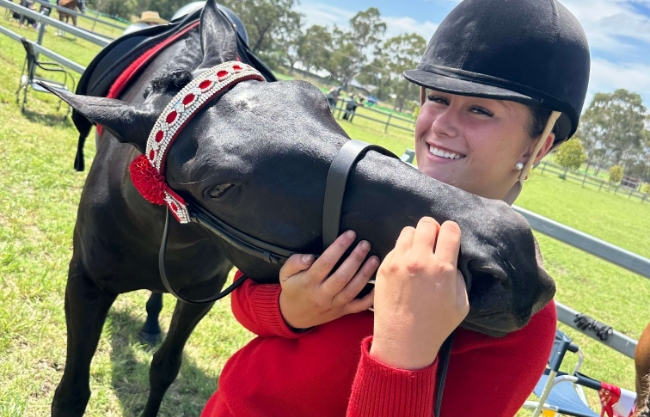
Brave, athletic and experienced, off-the-track Thoroughbreds have plenty to offer in a second career. But what happens when the skills learned on the racetrack meet the different expectations of equestrian riding?
An Australian study published in 2025 offers some interesting insights into the behaviour of off-the-track Thoroughbreds (OTTTBs), challenging some familiar assumptions and highlighting the importance of understanding a horse’s previous education.
Published in the scientific journal Animals, the study compared owner-reported behaviours from 265 OTTTBs with those of 1,368 other horses. Researchers examined characteristics including boldness, responsiveness to cues, rideability and trainability.
Their findings offer valuable lessons for anyone involved in retraining, riding or coaching Thoroughbreds in their second careers.
Bolder than expected
One of the most interesting findings was that OTTTBs were reported to be significantly bolder than other horses in the study.
They were less likely to show fear or distraction in response to everyday sights and sounds, including vehicles, dogs, children and unfamiliar surroundings.
The researchers described this as an unexpected result, given previous studies that have characterised Thoroughbreds as particularly reactive or excitable.
So what might explain the difference?
Racehorses typically experience extensive handling and exposure to different environments from a young age. Transport, busy stables, machinery, other horses and unfamiliar surroundings are all part of racing life.
This experience may contribute to the confidence observed in OTTTBs, although the study couldn’t establish whether the differences were due to early experiences, breeding, subsequent training or other factors.
It’s a potentially valuable advantage when horses move into second careers, where adapting to new environments and experiences is often essential.
The study also found that boldness tended to increase with age across both groups of horses, reinforcing the possible influence of experience over time.
Why slowing down might not be so straightforward
While OTTTBs demonstrated greater boldness, the study also identified an important difference in how they responded to certain cues.
Compared with other horses, OTTTBs showed lower responsiveness to signals to slow down or stop, along with lower working compliance.
This included behaviours such as pulling against the reins, bracing the neck, raising or tossing the head, and failing to respond consistently to slowing or stopping cues.
The researchers suggest that differences in how horses are ridden and trained for racing may help explain these findings.
In most equestrian disciplines, horses are taught to slow down in response to rein pressure, with the pressure released as soon as the horse gives the correct response.
But racehorses can experience rein pressure differently. The study discusses how racehorses may be ridden with sustained rein contact, with a release of pressure sometimes signalling acceleration.
These different learning experiences may influence how a horse interprets rein cues when it begins a new career.
Importantly, the researchers did not establish that racing practices caused the differences observed. They identified previous training experiences as one possible explanation worthy of further investigation.
For riders and coaches, though, the practical lesson is clear: we shouldn’t assume a horse understands a cue simply because it has already been ridden and trained.
Are OTT Thoroughbreds harder to train?
Another important finding was that the researchers identified no statistically significant difference between OTTTBs and other horses in the measures of trainability or rideability examined.
This challenges the idea that Thoroughbreds are necessarily more difficult to educate for a second career.
There are, however, some important qualifications.
The study’s measure of trainability was limited to responses to voice cues, while its measure of rideability focused largely on behaviours such as bucking and rearing. It didn’t assess every aspect of how readily horses learn or how easy they are to ride.
What the findings do reinforce is the importance of looking beyond breed stereotypes and considering the individual horse.
A horse’s behaviour reflects a combination of temperament, previous experiences, training, management and physical health.
Understanding those influences can help us make better decisions about how to support its education.
When a horse resists, what should we consider?
One of the most useful welfare messages in the research applies well beyond Thoroughbreds.
Behaviours we sometimes describe as resistance, disobedience or unwillingness may have several possible explanations.
The researchers discuss confusion, conflicting signals, fear, discomfort and physical pain as potential contributors to behaviours such as head-tossing, bracing against the reins or failing to respond to cues.
They also emphasise the importance of ruling out underlying physical problems when investigating unwanted behaviour.
For a horse transitioning from racing, this may include considering previous injuries, back discomfort, saddle and bit fit, and changes in workload or movement.
Increasing the strength of a cue isn’t necessarily the answer when a horse fails to respond.
Instead, we need to consider whether the horse understands what is being asked, whether the cues have been taught consistently, and whether something physical may be affecting its response.
These are important principles for every horse and rider, regardless of breed or discipline.
Building on the education they already have
A Thoroughbred leaving racing is not an uneducated horse. It has already learned a great deal about being handled, ridden and working with people.
But some of that education has been developed for a very different purpose.
The challenge of retraining is to build on existing knowledge while establishing the clear, reliable responses needed for a new career.
The researchers emphasise the importance of sound foundation training, particularly the basic responses to go, stop and turn.
For Pony Club riders and coaches, this means taking the time to establish consistent cues, recognising when a horse needs further education, and ensuring that the horse and rider are appropriately matched.
It also means recognising that a horse’s confidence in a busy environment doesn’t necessarily tell us how well it understands the aids.
A successful second career starts with understanding
Off-the-track Thoroughbreds make valuable contributions to Pony Club and equestrian sport, from pleasure riding and dressage to showjumping and eventing.
This research provides an opportunity to recognise not only what these horses have to offer, but also our responsibility to help them make a successful transition.
Their racing experiences may provide a valuable foundation, but every horse brings its own history, abilities and learning needs.
The better we understand those experiences, the better equipped we are to support each horse’s welfare, training and future.
- About the research
Owner-Observed Behavioral Characteristics in Off-the-Track Thoroughbreds (OTTTBs) in Equestrian Second Careers was published in Animals in July 2025.
The research was conducted by Anne-Louise Knox, Kate Fenner, Rebeka R. Zsoldos, Bethany Wilson and Paul McGreevy, using data collected through the Equine Behavior Assessment and Research Questionnaire (E-BARQ).
The findings are based on owner observations and identify associations rather than proving what caused the behavioural differences.
Read the full open-access study.
- Further learning
Pony Club Australia has previously hosted two webinars with Dr Kate Fenner, one of the study’s co-authors, exploring Thoroughbred behaviour and the transition to a second career.
Members interested in learning more about evidence-based retraining can revisit these sessions on the Pony Club Australia YouTube channel.