By Fiona Dearing, Bit Right Equine
Bridle fitting, much like bit fitting, is a relatively new concept to many riders. When I grew up in the 1980’s (notice how I avoided the use of the term ‘last century there?!) saddle fitting certainly wasn’t something we considered like we do now, and likewise, bridle fitting hasn’t really been considered seriously until recently. Just like with the bit, when we know better we can do better for our horses. So much of both our bridle and bit fitting are steeped in tradition and habit. We reach for the equipment we may have used for years and don’t always take into account changes available that can directly impact the comfort and therefore the performance of your equine best friend.
This article will focus on three areas of the bridle I commonly see fitted incorrectly and are easy changes to make even your current bridle fit better.
the browband
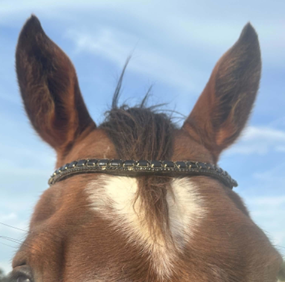
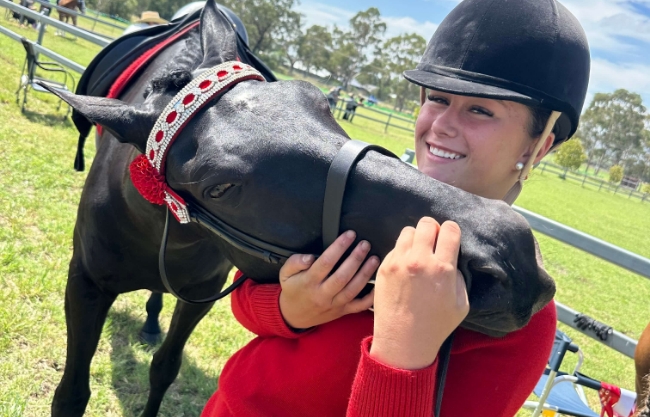
Browbands are a frequently overlooked piece of equipment. Often they’re ‘chosen’ because they came with the bridle, or, they looked pretty – I know I’ve fallen under the spell of a sparkle or two!
A poorly fitted browband can create constant pressure both across the horse’s forehead and behind the ears. A browband which is straight and not large enough will feel like you’re wearing a hat that’s too tight. Additionally it can pull the headpiece of the bridle into the base of the ears. This will cause discomfort and can contribute to a sensitivity to bridling along with head tossing and general resistance to work.
Something people often overlook with browbands is how they’ll fit once your pony or horse grows a winter coat. Our super hair-farmers can often put on a lot of coat around these sensitive areas and may even need a summer and a winter browband!
A correctly fitted browband should sit flat and smooth without any pull. It should allow the headpiece, or crown, of the bridle to sit comfortably behind the ears. I actually like how the curved browbands relieve some of that direct pressure from the horse’s forehead.
Often going up a size can be beneficial. Do bear in mind that equine tack is often like women’s clothing. A pony size in one brand may measure differently in another so it’s often best to measure them laying flat from end to end before purchasing a larger size. We also need to take into account the width of the horse’s forehead and how prominent their ear base is. A native pony will generally be more broad than a riding pony as an example.
The noseband
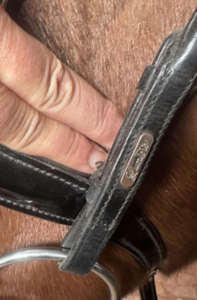
There’s a lot that can be written about nosebands. For this article I’m just going to focus on placement of a cavesson noseband. This placement is not just about the tightness.
The two finger rule in relation to placement operates in a different way to the one we use to check for tightness. A correctly fitted cavesson noseband should sit approximately two fingers below the cheekbone, also referred to as the facial crest. It’s that bone that sits out from the face about halfway between the eyes and the lips.
Emerging directly below the facial crest are the buccal branches of the facial nerve. You’ll notice there’s very little muscle or fat covering this area of the face. An incorrectly placed noseband that’s too high can compress these nerves that control facial expression and the lips, nostrils and nose. This can result in tingling, numbness and even facial paralysis.
A noseband placed too low can interfere with the soft nasal cartilage and also restrict breathing. Both incorrect placements cause unnecessary pressures and discomfort. If we add in the fact the noseband is also often too tight then we really have an uncomfortable horse.
The two finger rule will again vary with conformations across breeds and sizes. If your horse is rubbing the area where the cavesson was sitting after removing the bridle that’s a good sign to check on both placement and tightness. Remember, your horse’s behaviour is the only way they have to show you if they’re comfortable or not.
The throat lash
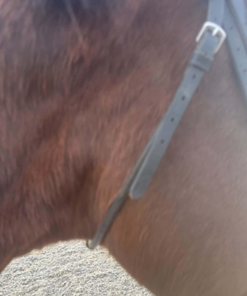
The throat lash exists for safety and stability, not control. There’s a fair amount of discussion about this piece of equipment. Many ask if a correctly fitted throat lash would actually stop the bridle from coming off entirely if something else broke. I’d prefer not to be in a position to test that particular theory but certainly don’t want it tight enough to be ‘holding’ the rest of the bridle on the horse’s head.
The old rule of being able to fit either a fist or four fingers between the horse’s jaw and the throat lash holds true. If fitted too tightly the throat lash can cause significant pressure under the jaw. This only amplifies when the horse flexes at the poll at which point you’ve further restrictions under the jaw as these tissues change the placement of the throat lash when the horse works into a frame. We absolutely don’t want to discourage this offering from the horse through them being made uncomfortable when softening.
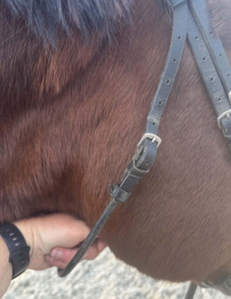
The throat lash should remain soft regardless of the head position. Again, with our hairy pony friends we do need to monitor how much of a beard they may grow in winter.
We all need to carefully consider our equipment in terms of our horses’ behaviours. It’s generally not about adding more equipment or increasing the pressures of the equipment we already have. By carefully observing our horses and making what may seem to be small adjustments we’re genuinely listening to them. Taking note of these three parts of our bridle fit is a simple way to increase our horses comfort and make for happier communication for both you AND your horse.