When we think about horse welfare, we often focus on feeding, gear, or veterinary care. But one of the most important welfare considerations is something we don’t always recognise straight away:
Is the horse actually fit enough for the job we’re asking it to do?
It may come as a surprise that many performance horses are not trained enough to be truly fit for competition.
What Does “Fitness” Really Mean?
Fitness in horses is not just about appearance or how energetic they feel.
Like human athletes, horses need conditioning that develops:
- Muscles
- Cardiovascular efficiency (how effectively the heart and body deliver oxygen during work)
- Energy systems within the body
This is the basis of equine exercise physiology — understanding how the horse’s body responds to work, and how training improves that response.
A horse that looks well and feels forward is not necessarily fit for the level of work required in competition.
Why Many Horses Are Undertrained
A common issue is that horses are worked at lower intensities in training than they experience in competition.
For example:
- A horse might mostly trot and canter at a steady pace at home
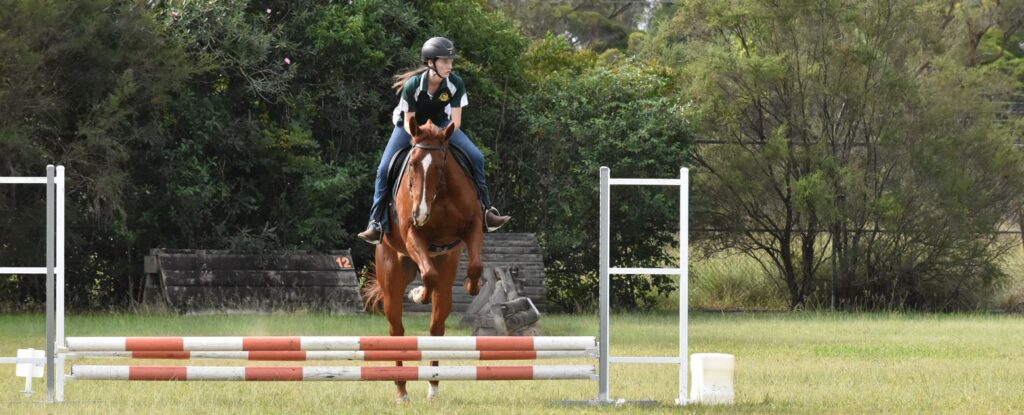
- But be expected to jump a full course, gallop cross country, or perform sustained, collected work in competition
If the training does not match the demands of competition:
- The horse tires more quickly
- The cardiovascular system is not fully conditioned
- The risk of injury increases
Understanding Aerobic and Anaerobic Fitness
Horses use two main energy systems during exercise:
Aerobic (with oxygen)
- Lower intensity, longer duration work
- Builds endurance and efficiency
- Relies on efficient oxygen delivery and use within the body
Anaerobic (without oxygen)
- High intensity, short duration work
- Used during galloping, jumping efforts, or sprints
- Can only be sustained for short periods
Both systems are important. Most competition horses use a combination of the two, depending on the discipline.
This is why training needs to include more than just steady work.
Training for the Job
Different disciplines place very different demands on the horse:
- Endurance requires sustained aerobic fitness over long periods
- Eventing cross country combines speed, strength, and stamina
- Racing demands rapid acceleration and high-speed effort
There is no “one size fits all” approach.
Each horse needs an individualised training program based on:
- Its current level of fitness
- Its discipline
- Its stage of development
What Does Good Training Look Like?
An effective fitness program includes a mix of:
- Baseline training: Building aerobic fitness and strength over time
- Higher intensity sessions: To develop anaerobic capacity
- Skill-specific work: Practising the demands of competition
- Recovery time: Allowing the body to adapt and strengthen
Progression is key. Fitness improves through gradual increases in intensity and duration, not sudden demands.
Monitoring Fitness
It’s not always easy to tell if a horse is getting fitter just by how it feels.
One useful indicator is heart rate recovery shortly after exercise.
Rather than waiting for the heart rate to return fully to normal, looking at recovery after 1 or 5 minutes provides a more practical and consistent measure of fitness.
As fitness improves:
- Horses can work at higher intensities with lower heart rates
- Their heart rate drops more quickly in the minutes immediately after exercise
It’s important to remember that factors like heat, excitement, and hydration can also influence heart rate, so trends over time are more useful than a single reading.
How to Check Recovery Heart Rate
You don’t need fancy equipment to start monitoring your horse’s fitness.
After exercise:
- Check your horse’s heart rate shortly after finishing work
- Then check again at 1 minute and/or 5 minutes after stopping
You can do this by:
- Using a heart rate monitor, or
- Feeling for the pulse under the jaw (facial artery)
What to look for:
- A faster drop in heart rate over those first few minutes generally indicates improving fitness
- Slower recovery may suggest your horse is not yet fit for that level of work
Tip: Try to measure under similar conditions each time (temperature, workload, warm-up), so you can track trends over time.
Welfare Matters: Fitness and the Whole Horse
Fitness is not just about performance.
A horse that is not adequately prepared for its workload may:
- Experience unnecessary fatigue
- Be at greater risk of injury
- Become stressed or resistant
At the same time, overtraining without considering the horse’s mental wellbeing can lead to a horse becoming “sour”.
Good welfare means finding the balance:
- Preparing the horse physically
- Supporting the horse mentally
- Providing positive experiences in training
A Simple Question to Take Away
Before your next ride or competition, ask yourself: Is my horse trained for what I’m asking it to do?
Fitness isn’t just about how a horse feels on the day. It’s built over time through appropriate, progressive training that matches the demands of the job.
Good welfare means preparing our horses for the work we ask them to do