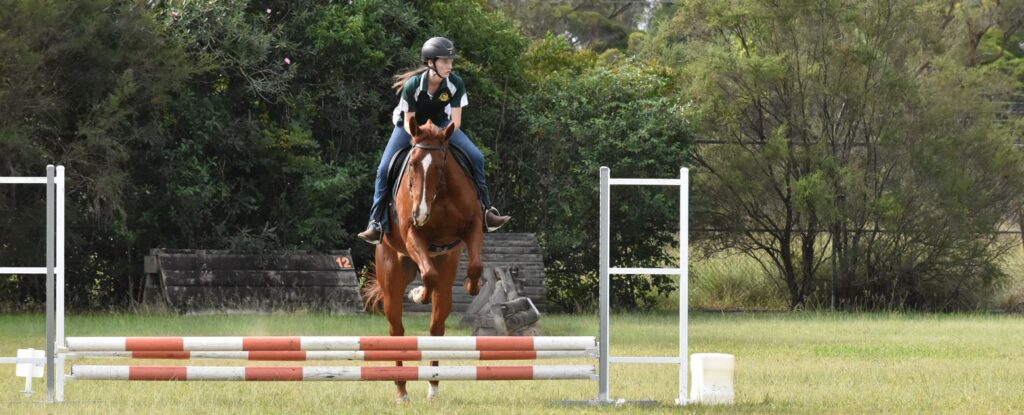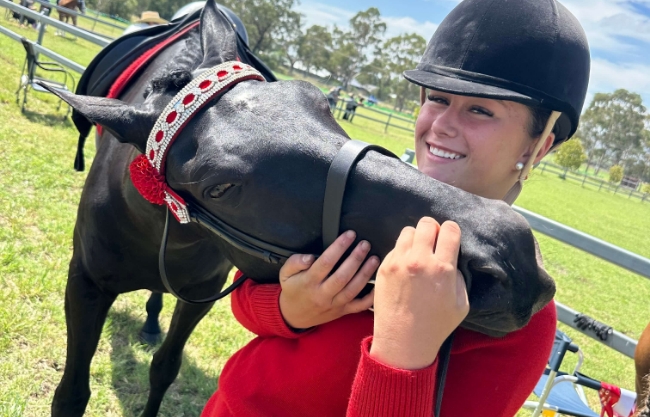
At Pony Club, our horses participate in many different activities, and it’s important that we always consider their welfare.
Research into equine biomechanics and physiology has generally found that most horses can comfortably carry around 20% of their body weight in total load. Total load includes the rider, saddle and all equipment, although this can vary depending on the horse’s build, fitness and workload.
This guideline is reflected in the Pony Club Australia Horse Welfare Policy and helps riders make informed decisions about their horse’s comfort and wellbeing.
Rider weight is only one factor in a horse’s comfort. Saddle fit, rider balance, horse fitness and the type of work being asked are equally important considerations.
For example, a horse weighing 500 kg should not carry more than 100 kg in total, including the rider, saddle and gear.
Knowing Your Horse’s Weight
If you’re unsure of your horse’s weight, you can estimate it using a tape measure and this horse weight calculator:
https://bit.ly/3VZlPSm
While this is only an estimate, it can give you a helpful starting point for understanding what your horse may comfortably carry.
Calculating Maximum Load
Once you know your horse’s approximate weight, you can calculate the recommended maximum load using this tool:
https://bit.ly/4d3nVHG
Remember that this load includes the combined weight of the rider and saddlery.
This calculator assumes:
- a well-balanced rider
- a horse at an appropriate body condition
- a properly fitting saddle.
These factors all influence how comfortably a horse can carry weight.
Factors Affecting How Much Weight Your Horse Can Carry
Conformation
Horses that tend to carry weight more comfortably often have a well-muscled body, a relatively short back and strong bone. Horses with longer backs or lighter builds may require more careful consideration when it comes to rider and equipment weight.
Fitness & Balance
The fitness and balance of both horse and rider matter. An unfit horse will struggle to support weight while maintaining balance. An unbalanced rider can also place uneven strain on the horse’s back and affect the horse’s ability to move freely.
Duration & Intensity of Work
Activities over rough terrain, for longer durations, and at increased speeds demand more effort from the horse. These types of activities should only be attempted when both horse and rider are fit enough to manage the increased workload.
Equipment & Hoof Care
A properly fitting saddle helps distribute the rider’s weight evenly and prevents soreness. Regular hoof care is also essential, as balanced hooves allow the horse to move and carry weight comfortably. Horses that wear down their hooves quickly or have thin soles may benefit from shoes or protective boots, based on advice from a farrier or veterinarian.
Introducing This Topic At Rallies
Weight-carrying capacity is an important welfare topic, but it should always be approached thoughtfully and with care.
At Pony Club rallies, the focus should be on education and practical horsemanship.
Clubs can:
- explain the 20% guideline and why it exists
- demonstrate how to estimate a horse’s weight using a weight tape
- show riders how to weigh their saddlery and equipment, which forms part of the total load a horse carries
- share tools that families can use at home to make informed decisions.
Conversations about individual rider weight may sometimes arise when considering a horse’s welfare. These discussions are best handled privately and respectfully, typically between the rider, their parent or guardian, and a trusted coach.
Like many aspects of horsemanship, these conversations are best approached as supportive coaching discussions focused on the horse’s welfare, rather than criticism of the rider.
Because this can be a sensitive topic, it should only be raised where there is a strong and supportive relationship between the people involved. If a coach or club official is unsure how to approach the conversation, it may be more appropriate to speak first with the rider’s parent or guardian, or seek guidance from a senior coach or club leader.
Rallies should remain a supportive and inclusive environment, where riders are not singled out or discussed in a group setting.
Putting Horse Welfare First
Good horsemanship means always putting the horse’s welfare first. Taking the time to understand what your horse can comfortably carry helps ensure they remain sound, comfortable and willing partners for many years to come.